
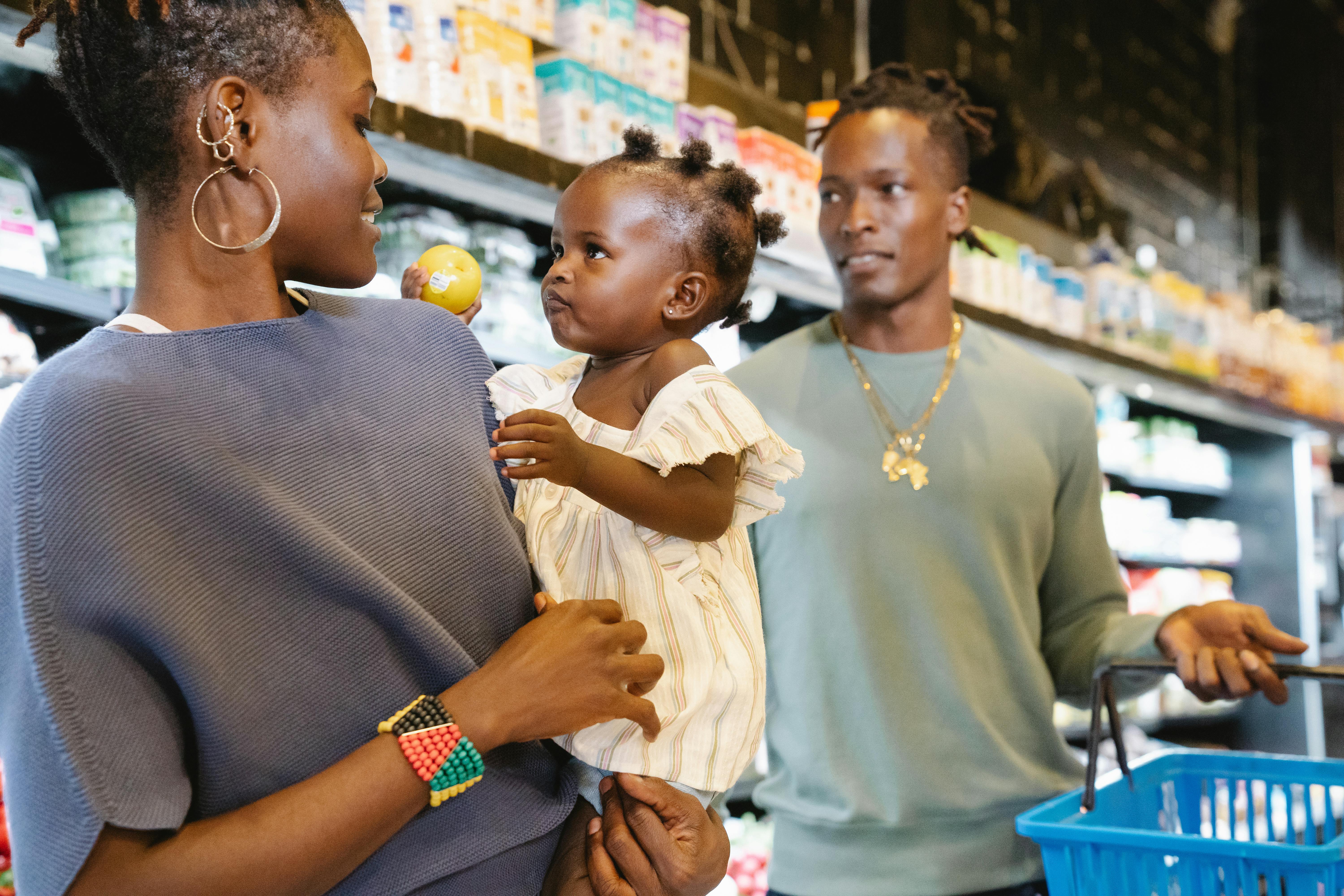
Unlock top grocery savings trends for 2026! Compare deals effectively, leverage new tech, and maximize your grocery budget's $ ROI with expert strategies for US shoppers.
💰 Secure Top Deal: Go straight to the offer →
📍 More from this category: Grocery Savings – All Articles
Introduction: The Real Story Behind Grocery Savings in 2026
Best Home & Kitchen 2026: Ultimate Comparison →
Are you ready for 2026? The grocery aisle, once a predictable landscape of weekly ads and coupon clipping, has transformed into a dynamic battleground where every dollar counts more than ever. For American households, navigating rising food costs, fluctuating supply chains, and an ever-expanding array of shopping options has become a critical financial skill. As we look ahead to 2026, the traditional methods of saving money on groceries are no longer enough. To truly make your budget stretch, you need to understand the emerging "Grocery Savings Trends 2026" and strategically "Compare Deals" to "Maximize Your $ ROI."
This isn't just about finding the cheapest milk; it's about smart financial stewardship, leveraging cutting-edge technology, and adopting a proactive mindset to optimize one of your largest recurring household expenses. "TOP BRANDS FOR ALL" is here to arm you with the insights and actionable strategies to not just survive, but thrive, in the evolving grocery market. We’ll delve into the data, analyze expert perspectives, and reveal the ultimate comparison tools that will empower you to make every grocery dollar work harder for you.
Deep Dive: Backgrounds, Facts, & US Market Data for Grocery Savings
The landscape of grocery shopping in the United States continues its rapid evolution, shaped by a confluence of economic, technological, and social forces. As we approach 2026, understanding these foundational shifts is paramount for any household aiming to maximize their grocery ROI. Post-pandemic supply chain adjustments, persistent inflationary pressures, and a new generation of digital-native shoppers have fundamentally altered consumer behavior and retailer strategies.
Lingering Inflation and Consumer Spending Habits
While the peak of food inflation seen in 2022-2023 may have softened, analysts project that grocery prices will continue to see modest increases into 2026, driven by factors like labor costs, climate change impacts on agriculture, and geopolitical events. The average American household currently allocates a significant portion of its budget to food, with USDA data consistently showing this as a top-three expenditure. In 2026, this pressure point will only intensify, forcing consumers to be more discerning. We're seeing a sustained trend of shoppers prioritizing value, scrutinizing unit prices, and actively seeking out promotions rather than defaulting to brand loyalty.
The Digital Transformation of Grocery Retail
The rise of online grocery shopping isn't just a convenience; it's a critical component of the 2026 savings strategy. Platforms like Amazon Fresh, Walmart Grocery, and Instacart have conditioned consumers to expect digital accessibility, but more importantly, they offer a wealth of data for comparison. Retailers are investing heavily in AI-driven personalization, offering tailored deals based on past purchases and browsing history. This means the savvy shopper needs to understand how to leverage these personalized offers rather than being passively influenced by them.
Private Labels and Discount Retailers Gain Dominance
Expect private label (store brand) products to command an even larger share of the market by 2026. Retailers like Aldi and Trader Joe's have built their entire business model on high-quality, low-cost private labels, demonstrating their potential for significant savings without sacrificing quality. Even traditional supermarkets like Kroger and Albertsons are expanding their own brands, often offering a 20-30% price differential compared to national brands. This trend is a direct response to consumer demand for value and presents a massive opportunity for budget-conscious shoppers.
The Rise of Subscription Models and Meal Kits (with a caveat)
Meal kit services and grocery subscription boxes have carved out a niche for convenience and curated experiences. While they offer benefits in terms of meal planning and waste reduction, their inherent premium pricing often contradicts pure savings goals. However, by 2026, expect to see more flexible and customizable subscription models that allow for greater control over ingredients and costs, potentially offering savings on specific staples or bulk items. The key will be to critically assess their true ROI against traditional grocery shopping.
Data-Driven Decisions: Beyond the Weekly Ad
Traditional weekly paper ads are giving way to dynamic digital flyers and app-based deal aggregators. Tools like Flipp, Ibotta, and Fetch Rewards aren't just for coupons; they are data powerhouses. In 2026, the most successful grocery savers will be those who actively use these platforms to "Compare Deals" across multiple stores simultaneously, track price histories, and capitalize on cash-back offers that directly impact their "ROI." This requires a shift from reactive shopping to proactive, data-informed purchasing decisions.
Expert Analysis & Industry Insights: Mastering Your Grocery $ ROI
As elite strategists for "TOP BRANDS FOR ALL," we recognize that true grocery savings in 2026 go beyond surface-level tactics. It's about understanding the underlying economics, retailer psychology, and leveraging advanced techniques that others often miss. The goal isn't just to save money, but to optimize your "Return on Investment" (ROI) for every dollar spent on groceries.
The Nuance of "Sale Prices" and Unit Economics
Many shoppers fall into the trap of buying items simply because they're "on sale." Our expert analysis reveals that a sale price isn't always the best price, especially when considering unit economics. By 2026, sophisticated shoppers will consistently calculate the "unit price" (cost per ounce, per item, etc.) to accurately "Compare Deals" across different sizes and brands. A larger package on sale might still be more expensive per unit than a smaller, regularly priced store brand. Retailers strategically price larger packages to *appear* cheaper, but a quick calculation often reveals the truth. Prioritize unit price over sticker price.
The Strategic Use of Loyalty Programs and Personalized Offers
Grocery loyalty programs have evolved significantly. In 2026, they are less about generic discounts and more about hyper-personalized offers driven by AI. Retailers use your purchase history to predict your needs and offer targeted discounts on items you frequently buy or might be interested in. The nuance here is to actively engage with these programs – checking your app for personalized coupons before you shop, linking your rewards card, and understanding how points or cash-back systems work. Don't just passively accumulate points; strategically redeem them for maximum value. Some programs even offer gas rewards, adding another layer to your overall "ROI."
Combatting Food Waste: The Unsung Hero of Savings
One of the biggest leaks in any household budget is food waste. Americans throw away an estimated 30-40% of their food supply, translating to hundreds, if not thousands, of dollars annually. By 2026, reducing food waste will be recognized as a primary "Grocery Savings Trend." This involves meticulous meal planning, proper food storage techniques (understanding shelf life, freezing, preserving), and creative cooking with leftovers. Think of every uneaten item as money directly thrown away; therefore, effective meal management offers an immediate and significant "ROI" on your grocery spending.
The Psychology of Impulse Buys and Strategic Shopping Lists
Grocery stores are meticulously designed to encourage impulse purchases. End-cap displays, strategic product placement, and appealing aromas are all calculated to make you spend more. Our expert advice for 2026 is to always shop with a detailed list, and crucially, stick to it. Consider using digital shopping lists that can be synced and updated, allowing for real-time price comparison and preventing deviation. Shopping on a full stomach can also significantly reduce the likelihood of succumbing to tempting, unnecessary purchases, thereby protecting your budget's "ROI."
Leveraging AI and Machine Learning for Predictive Savings
The future of "Grocery Savings Trends 2026" lies heavily in artificial intelligence and machine learning. New apps and platforms are emerging that not only aggregate deals but predict price fluctuations, suggest optimal shopping times, and even recommend recipes based on discounted ingredients. These tools move beyond simple couponing to offer predictive analytics, helping you buy items when they are at their lowest anticipated price point. Understanding and adopting these AI-powered tools will be a differentiator for maximizing your "ROI" in the coming years.
💰 Ultimate Comparison: The Best Options to Maximize Your $ ROI (HIGH CPC SECTION)
In 2026, maximizing your grocery dollar requires a multi-faceted approach, combining technology with timeless strategies. Here, we present the ultimate comparison of approaches, highlighting how different methods contribute to your overall ROI.
Premium Pick: AI-Powered Grocery Optimization Suites
For the shopper serious about achieving the highest possible ROI with minimal time investment, next-generation AI-powered grocery optimization suites are the premium choice. These aren't just deal aggregators; they are intelligent personal shopping assistants. Imagine an app that learns your shopping habits, dietary preferences, and local store prices, then dynamically generates an optimized shopping list, highlighting the best deals across *all* nearby retailers, factoring in loyalty programs, digital coupons, and even predicting future price drops. While the most advanced versions might come with a small subscription fee or be integrated into premium loyalty programs, the potential for significant savings and time efficiency makes them a top-tier investment.
- **Key Features:** Cross-store price comparison, predictive pricing alerts, personalized deal aggregation, automated coupon clipping, inventory management (integrating with smart fridges), recipe suggestions based on sales.
- **Best For:** Tech-savvy individuals, busy professionals, families with complex dietary needs, anyone seeking to automate and optimize their savings without extensive manual effort.
- **Potential ROI:** Up to 25-35% annual savings on your grocery bill through hyper-optimization and waste reduction.
Value Pick: The Hybrid Smart Shopper Strategy
For those who prefer a more hands-on approach or are budget-conscious about app subscriptions, the Hybrid Smart Shopper Strategy combines the best of traditional wisdom with accessible digital tools. This method emphasizes diligent planning, smart store choices, and leveraging free comparison apps and cash-back programs. It requires more active engagement but offers substantial savings without direct monetary investment in premium tools.
- **Key Features:** Weekly ad comparison (digital flyers like Flipp), unit price calculation, strategic store rotation (e.g., Aldi for staples, warehouse clubs for bulk, traditional grocer for specific sales), cash-back apps (Ibotta, Fetch Rewards), meal planning, private label prioritization.
- **Best For:** Budget-conscious shoppers, those who enjoy the "hunt" for deals, individuals willing to invest time in planning and comparison.
- **Potential ROI:** 15-25% annual savings, contingent on consistent application of strategies.
To further illustrate the tangible benefits, here's a detailed comparison:
| Feature/Strategy | AI-Powered Optimization Suites (Premium Pick) | Hybrid Smart Shopper Strategy (Value Pick) |
|---|---|---|
| **Initial Investment (Time/Effort)** | Low (after initial setup); AI automates most tasks. | Moderate to High; requires active research and planning. |
| **Monetary Cost** | Potentially a small monthly/annual subscription fee. | Mostly free (free apps, time investment). |
| **Complexity** | Low for user; high for underlying technology. | Moderate; requires understanding of various tools and tactics. |
| **Potential Savings ROI** | Highest (25-35%+) due to comprehensive optimization. | Significant (15-25%) with consistent effort. |
| **Key Features** | Predictive pricing, personalized deals, cross-store comparison, automated couponing, smart list generation. | Manual weekly ad comparison, unit price focus, cash-back apps, store brand loyalty, meal planning. |
| **Best For** | Maximum convenience and savings, tech enthusiasts. | Budget-conscious, hands-on shoppers, value seekers. |
| **Time Savings** | High, as AI handles research and comparison. | Low to moderate, requires dedicated planning time. |
Future Outlook & 2026 Trends in Grocery Savings
Looking beyond the immediate horizon, several transformative trends are poised to redefine "Grocery Savings" and "Maximizing Your $ ROI" for American consumers in 2026 and beyond. These shifts will empower shoppers with unprecedented control and insight, but will also demand adaptability.
Hyper-Personalization and Dynamic Pricing
The era of one-size-fits-all promotions is rapidly fading. By 2026, expect grocery retailers to utilize advanced AI and machine learning to offer hyper-personalized pricing and deals. This means your unique shopping history, demographic data, and even real-time location could influence the prices you see. While this offers immense potential for targeted savings, it also requires vigilance. Savvy shoppers will need to understand how to opt-in for the best personalized deals while being aware of dynamic pricing that might not always be in their favor.
Subscription Models Beyond Meal Kits
Beyond traditional meal kits, 2026 will likely see an expansion of flexible grocery subscription models. Imagine subscribing to a service that delivers your pantry staples (e.g., coffee, paper towels, canned goods) on a recurring schedule, often at a discount for commitment. This reduces impulse buys and allows for bulk savings on non-perishables. The key trend will be customizable subscriptions, allowing consumers to finely tune what they receive and when, optimizing for both convenience and cost.
The Rise of "Ugly Produce" and Imperfect Foods
As food waste remains a critical issue, expect a significant increase in the availability and acceptance of "ugly produce" or "imperfect foods" programs. These initiatives sell produce that doesn't meet aesthetic standards but is perfectly good for consumption, often at a substantial discount. Services like Misfits Market and Imperfect Foods are pioneers, and by 2026, more mainstream grocers will integrate similar programs, offering a sustainable and cost-effective way to get fresh ingredients.
Augmented Reality (AR) Shopping Aids
Imagine walking through a grocery store with your smartphone, and an AR app overlays real-time information on products: unit price comparisons with competitors, nutritional breakdowns, allergen alerts, and even virtual coupons. This technology, still in its nascent stages, could become a powerful tool for instant "deal comparison" and informed purchasing decisions by 2026, revolutionizing how we interact with physical retail environments.
Blockchain for Supply Chain Transparency
While often associated with cryptocurrency, blockchain technology has immense potential for grocery supply chains. By providing immutable records of a product's journey from farm to shelf, blockchain could offer unprecedented transparency regarding origin, quality, and ethical sourcing. For consumers, this translates to greater trust in product claims and, potentially, the ability to trace price fluctuations back to their source, empowering more informed choices and better "ROI" on premium or specialty items.
Gamification of Savings
Expect more apps and loyalty programs to incorporate gamification elements, turning grocery savings into an engaging challenge. Earning badges for buying healthy options, competing with friends for savings streaks, or unlocking exclusive discounts through interactive games could make budgeting more fun and reinforce positive spending habits, driving higher engagement and ultimately, greater savings.
Conclusion: Your Path to Maximized Grocery ROI in 2026
The future of grocery shopping in 2026 is not about passively accepting rising costs; it's about actively engaging with a dynamic market to "Maximize Your $ ROI." From leveraging sophisticated AI-powered tools to mastering the timeless art of unit price comparison, the strategies outlined here provide a comprehensive roadmap for American households to take control of their food budget.
The "Grocery Savings Trends 2026" demand a proactive mindset, a willingness to "Compare Deals" across platforms, and a commitment to reducing food waste. Whether you choose the cutting-edge automation of AI optimization suites or the diligent, hands-on approach of the Hybrid Smart Shopper, the power to save significant dollars rests in your hands. Embrace these trends, adapt your shopping habits, and transform your grocery trips from a chore into a strategic financial victory. Your wallet, and your peace of mind, will thank you.
👉 More News: Best US Grocery Savings 2026: Avoid Retailer Pricing Traps!
📩 TOP BRANDS FOR ALL Newsletter
Never miss important trends again. Subscribe for free.
Subscribe Now